The problem
A homeopathic consultation is long and detailed. The doctor asks about the complaint, but also sleep, food, fears, dreams, family history and dozens of things that make symptoms better or worse. Most of that goes onto paper forms. Turning those notes into a remedy means finding each symptom in a repertory (a reference book that lists symptoms and the remedies known for them) and tallying the results by hand.
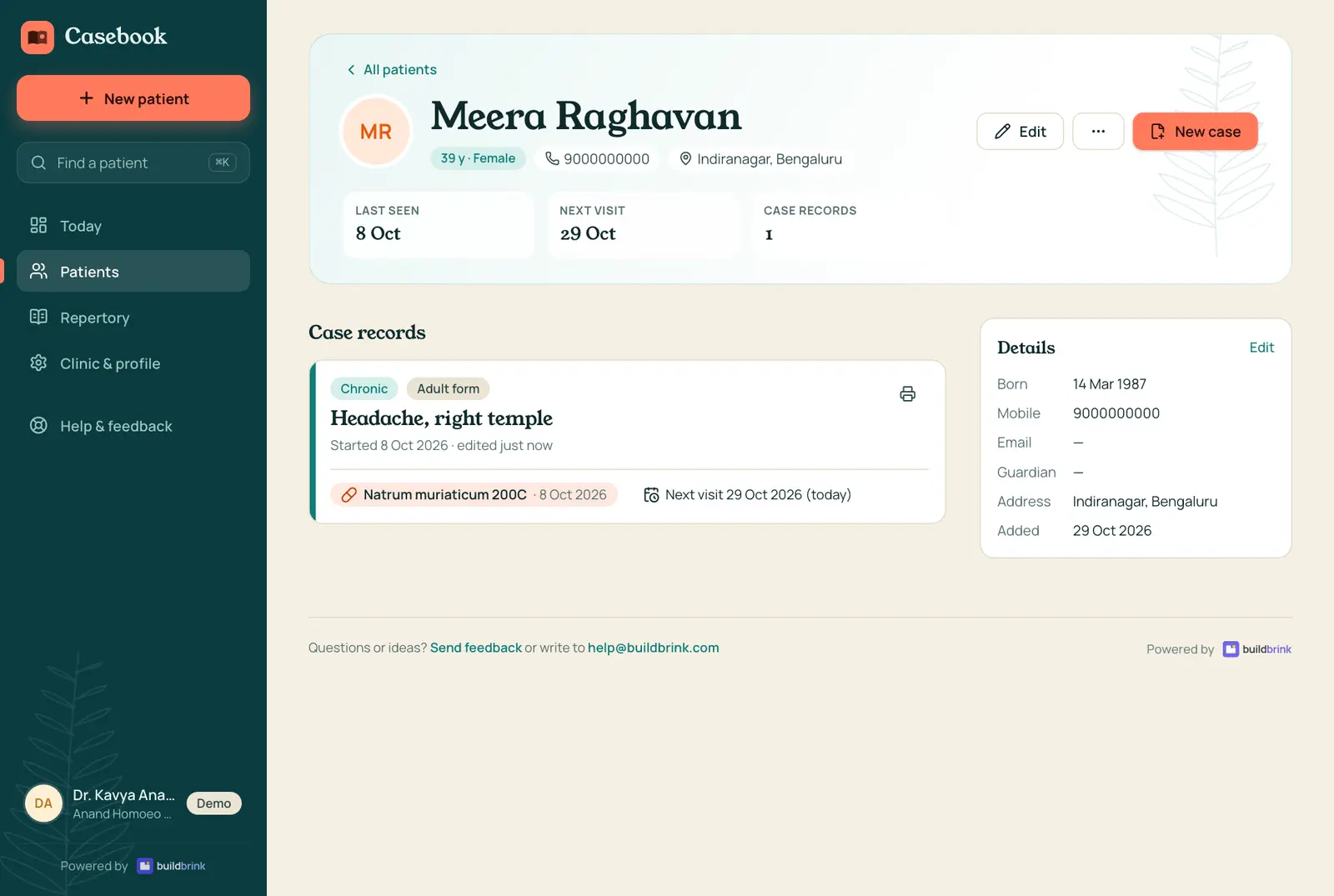
So the paperwork piles up, finding a past case is slow, and the analysis happens after the patient has left.
What we built
Casebook is a web app the doctor uses during the consultation, on a laptop or tablet.
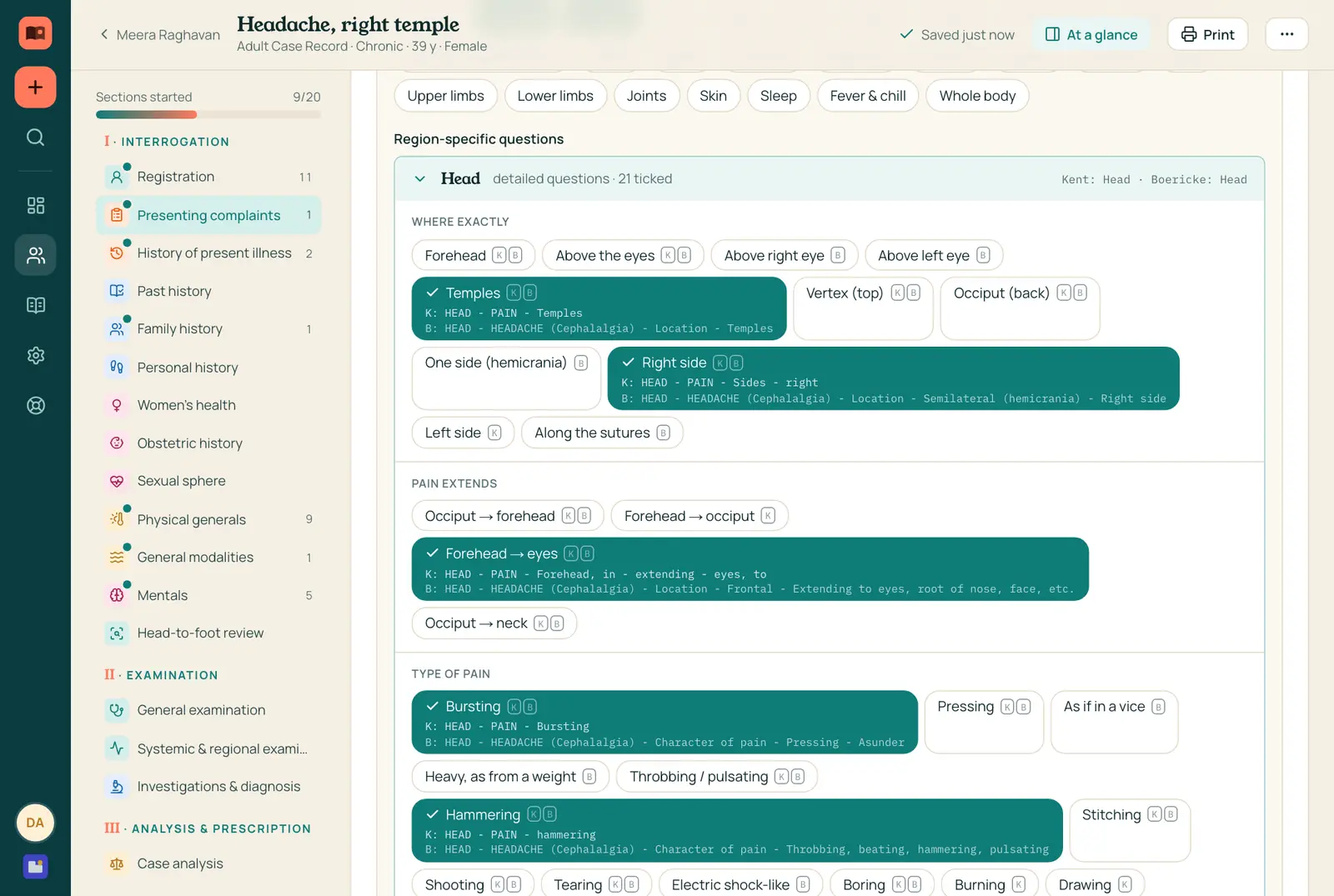
- Two case records, adult and child, built on the official Indian NABH/CCRH case format, with the depth of established case-taking forms. The child record adds birth history, milestones, vaccinations and behaviour.
- Questions for each body region. Choose Head and a panel opens with the questions a homeopath would ask about the head: where exactly, what kind of pain, what makes it worse, what comes with it.
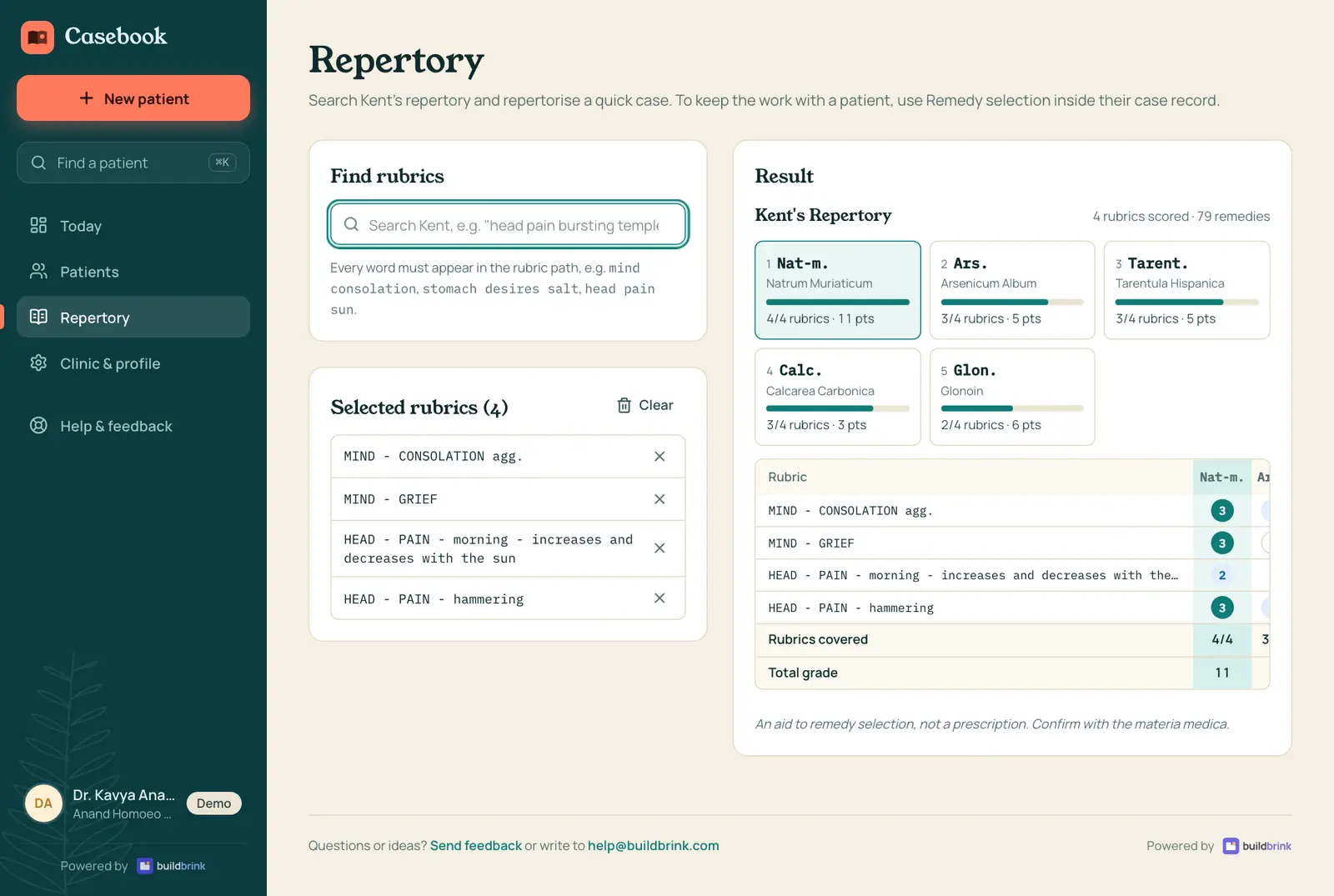
- Every answer maps to a rubric. Each option is tagged with its rubric in Kent’s and Boericke’s repertories, both public domain. A script checks every tag against the books’ own text.
- Live repertorisation. The app ranks remedies by how many rubrics they cover, then by total grade, and updates as the case is taken. It suggests and the doctor decides.
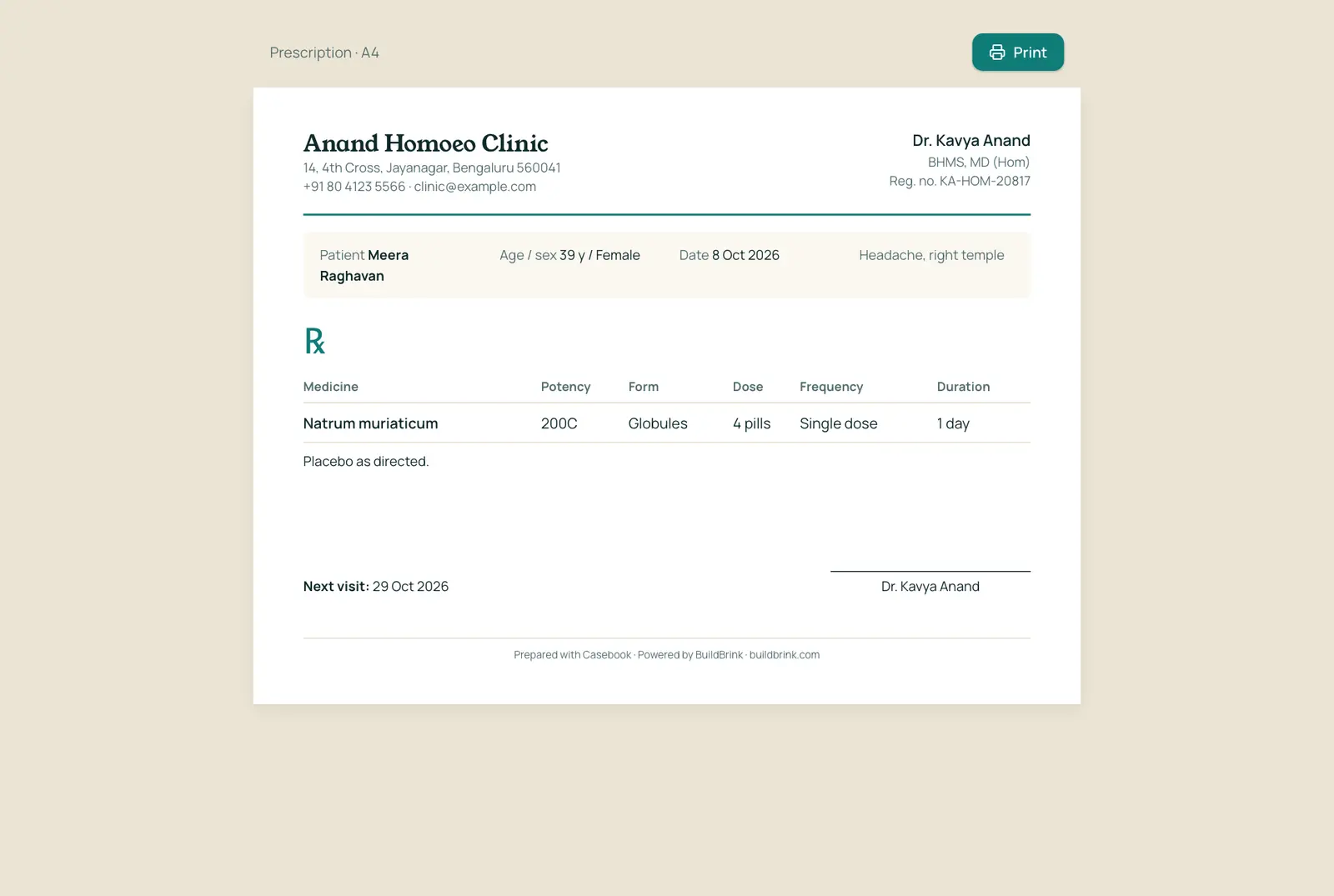
- Prescriptions and full case records print on the clinic’s own letterhead.
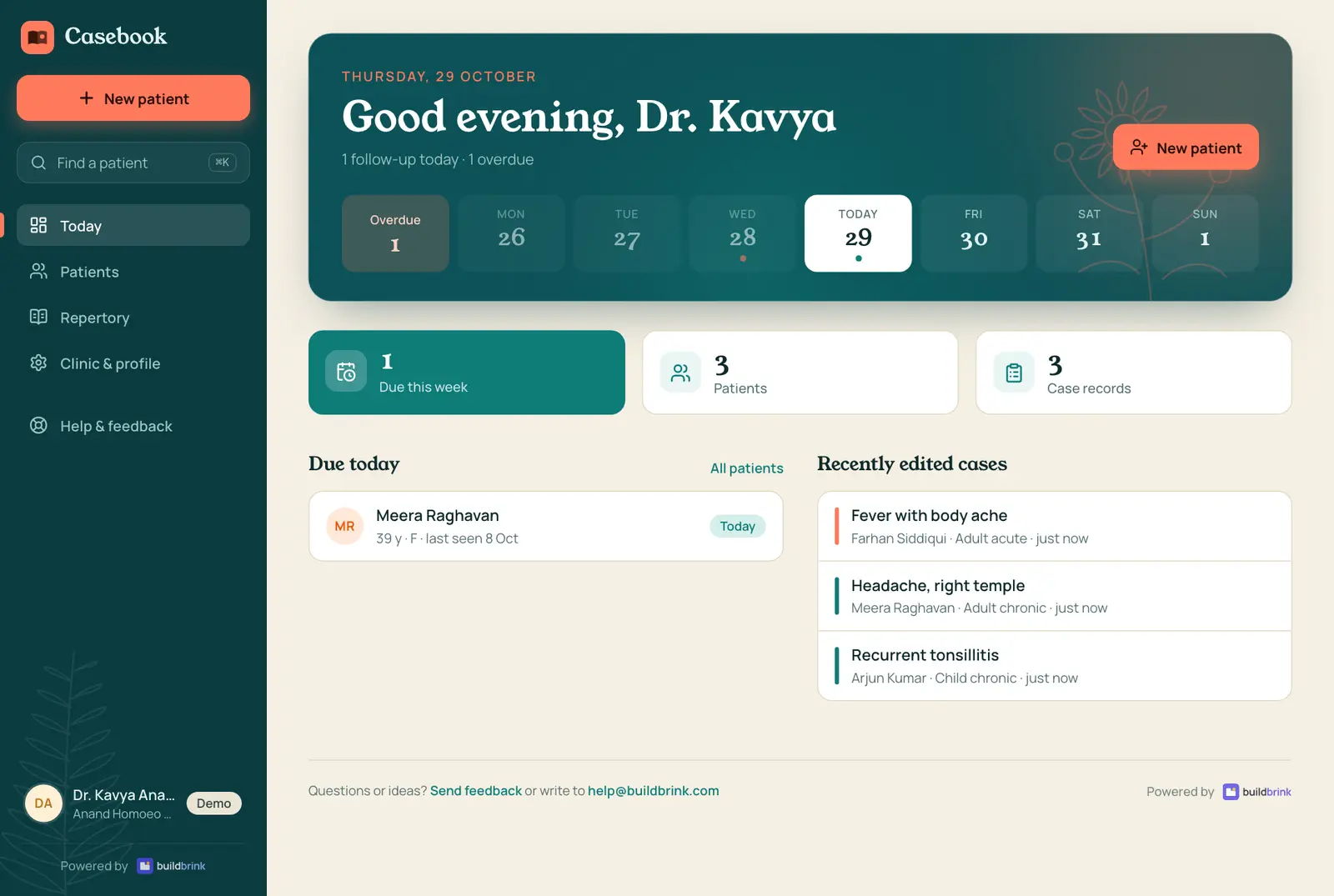
- Follow-ups show which patients are due today or overdue.
Built for a real clinic
- Fast to fill. Quick-pick chips first and free text second. Every section is optional, so the same form handles a five-minute acute case or a full chronic one.
- Nothing gets lost. Every change saves automatically, and an offline cache keeps typing safe through a dropped connection.
- Private by default. Each doctor sees only their own patients, enforced by database rules and not just the screen. Sign-up is closed: doctors request access and an admin approves them.
- Data stays in India. Everything runs in Google Cloud’s Mumbai region.
What’s next
The form engine and the repertory data are the foundation for the AI layer: summarising a long case in a few lines and suggesting how to classify symptoms and which rubrics to use. The doctor confirms every suggestion before it counts.